
Pregnancy Test Line Progression: What It Should Look Like
Learn what normal pregnancy test progression looks like, why lines stall or fade, and compare your photos side-by-side with a free collage checker.
Build your progression collage
Upload one photo at a time (or several), align each strip in the stencil, then add DPO, date, and brand. Create a shareable collage when you have at least 2 strips.
0 / 10 strips · saved on this device only
Loading…
Key Takeaways
- Pregnancy tests detect hCG in urine, a hormone produced in pregnancy.
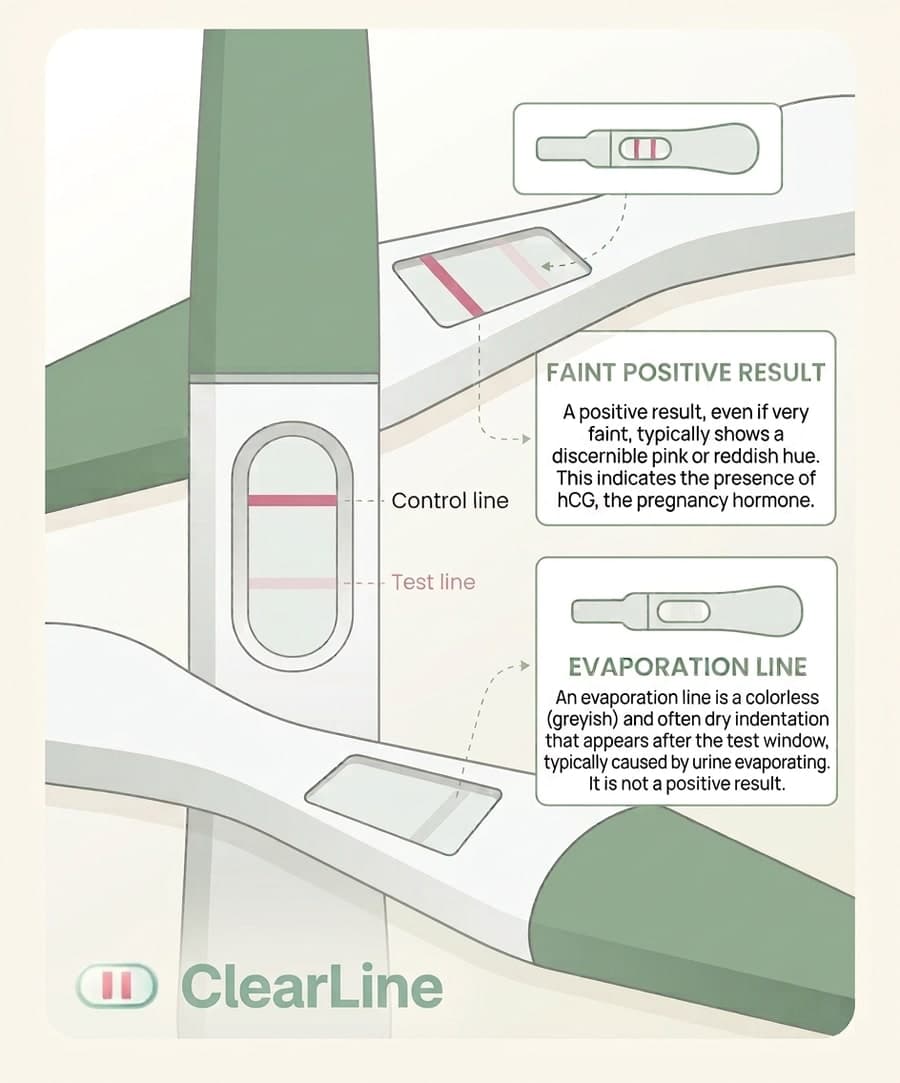
- When a test detects hCG, a colored test line appears; that is a positive result, even if the line is faint.
- In early pregnancy, hCG often roughly doubles every ~2 days, which can make the test line darker when you retest.
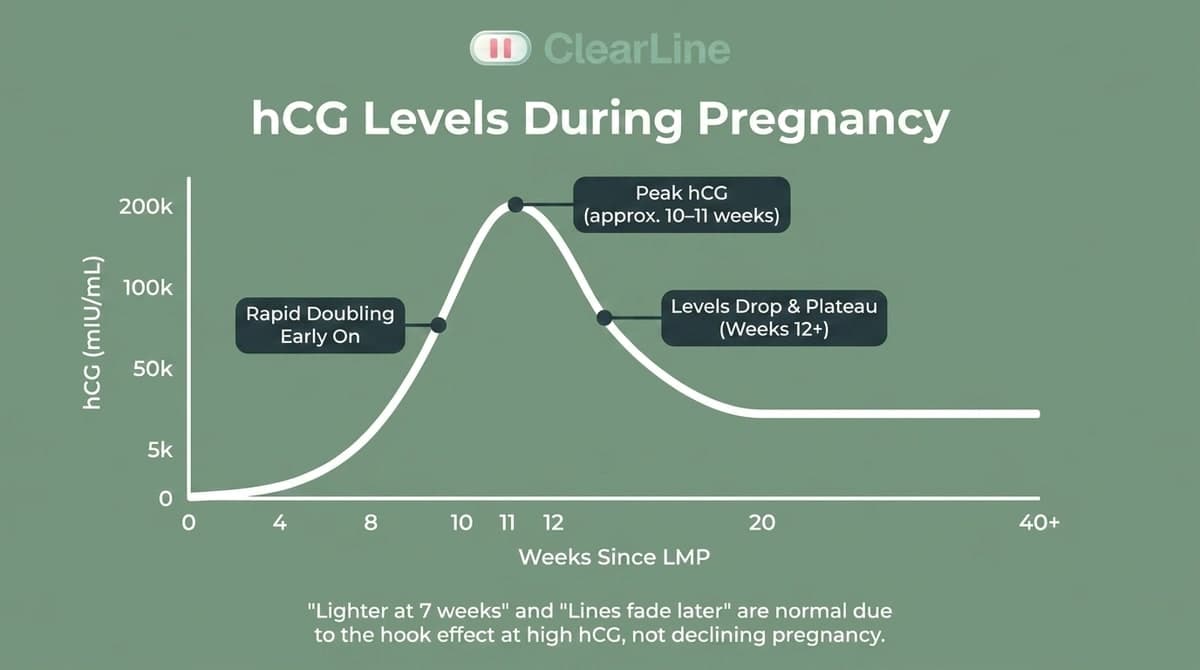
- Around 10–11 weeks, hCG often peaks; afterward levels may hold steady or drop, so lines can look the same or lighter.
- Expired tests, mixing brands, and diluted urine are common reasons progression looks “off.”
- Reading a test too late can create an evaporation line that looks faintly positive but is not a valid result.
- Chemical pregnancy and ectopic pregnancy can also affect how lines progress. Seek care for pain, heavy bleeding, or ongoing worry.
- Use first-morning urine and read the test within the package timeframe for the most reliable comparison.
How Do Pregnancy Tests Work?
At-home pregnancy tests look for hCG (human chorionic gonadotropin) in urine. Your body starts producing hCG after implantation, so a positive urine test is strong evidence of pregnancy when the test is used correctly.
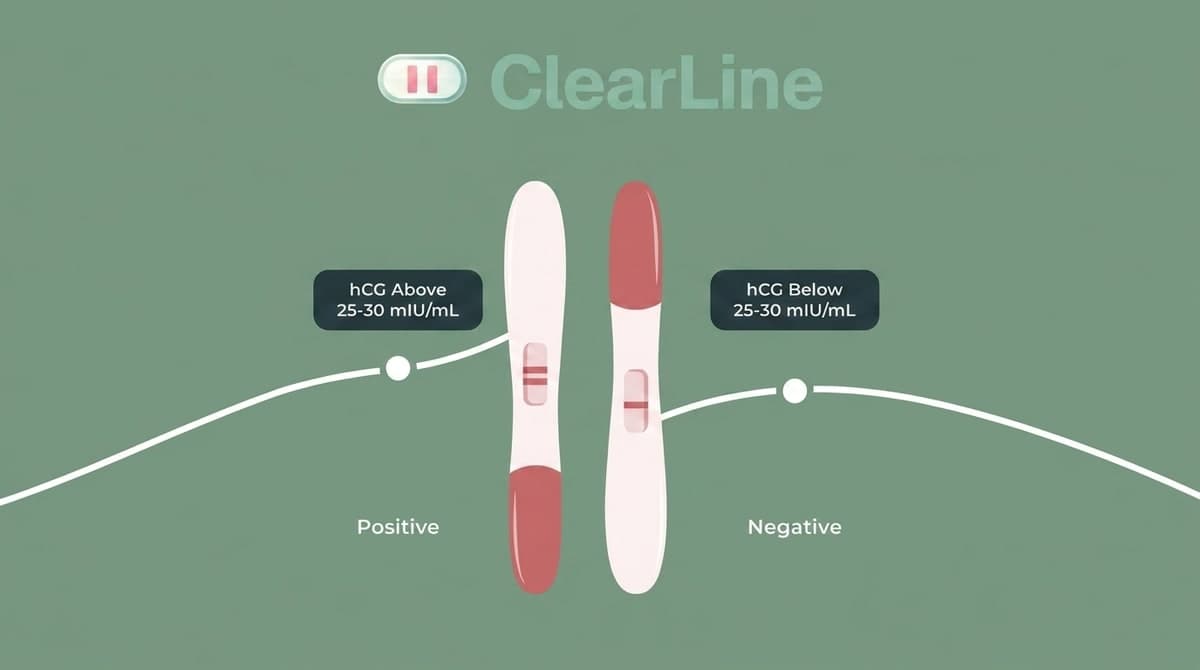
Most strip and midstream tests show two regions: a control line (the test is working) and a test line (your result). A positive result is any colored test line (pink, blue, or purple), regardless of how light it is. Darker lines generally reflect higher hCG, but darkness alone is not a precise hormone measurement.
Sensitivity varies by brand. Many standard tests need about 20–25 mIU/mL of hCG for a clear positive; early-detection tests claim lower thresholds. Waiting until the first day of a missed period gives hCG more time to rise and reduces false negatives. If results are unclear but you have pregnancy symptoms, wait a few days and retest.
What Is Pregnancy Test Line Progression?
Pregnancy test line progression is how the test line changes (usually darkening) as hCG rises over days or weeks. In early pregnancy, many people compare photos every 48 hours to see whether the line is getting stronger.
Normal early progression shows a steady darkening over several days. A line that stays faint or gets lighter can be due to testing conditions (dilution, brand changes) or, less often, early pregnancy complications. The collage tool above helps you line up photos so small changes are easier to see.
What Does a Normal Pregnancy Test Line Progression Look Like?
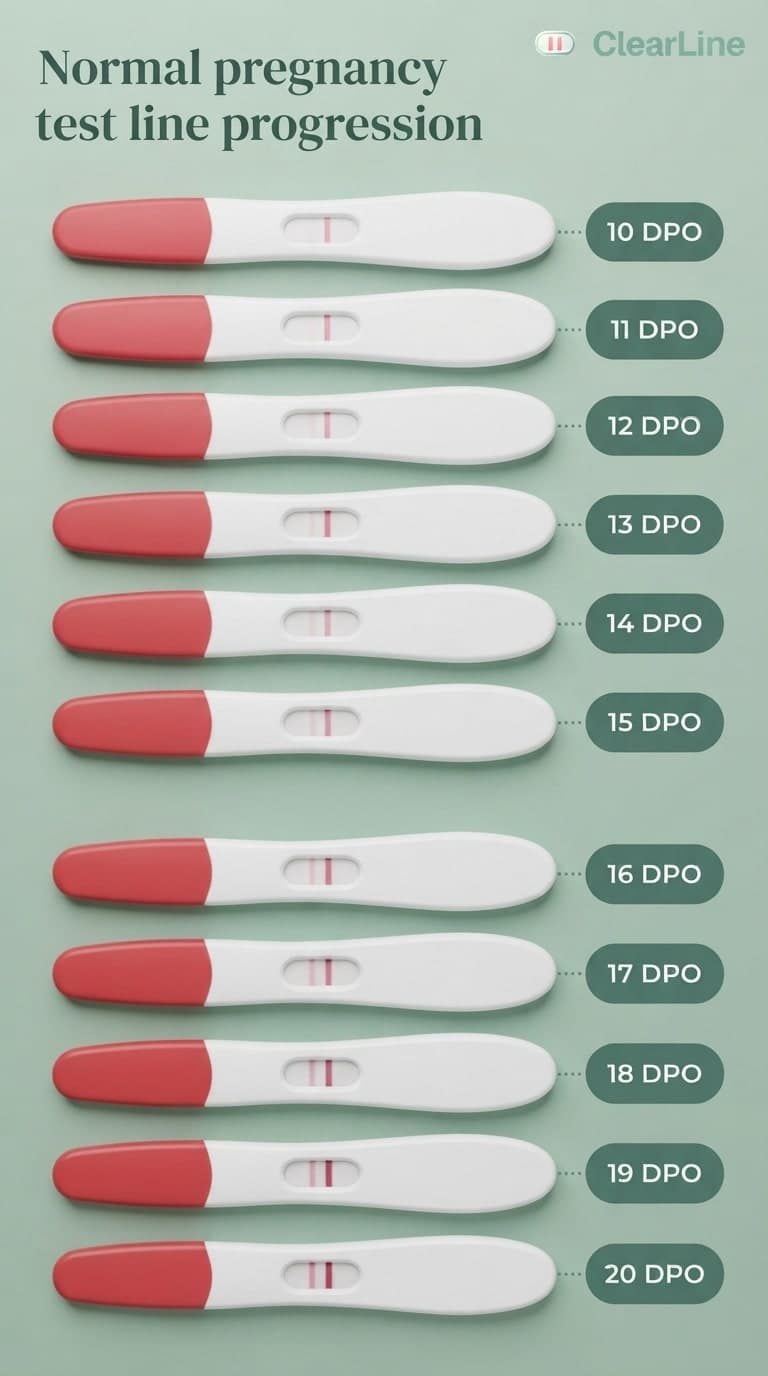
As a rule of thumb in early pregnancy, test lines should get darker as you move further along, because hCG often roughly doubles every 48–72 hours for the first several weeks. From about 8 DPO to 14 DPO, many people see a barely visible line become faint-but-clear, then more obviously positive.
By the mid-to-late teens DPO, some progressions show the test line catching up to, or even looking darker than, the control line (sometimes called a “dye stealer”). That pattern is one possible outcome of rising hCG, not a requirement for a healthy pregnancy.
This “doubling time” slows as pregnancy advances. Around 10–11 weeks of gestation, hCG commonly peaks; afterward it may stay steady or decline. If you keep testing past that point, lines can look the same or lighter even when pregnancy is healthy.
There is wide normal variation. Some people have a strong line by 10 DPO; others stay faint longer after later implantation. What matters most early on is whether your line is darkening over time under consistent testing conditions, not matching someone else’s darkness on a single day.
Why Isn’t My Pregnancy Test Line Getting Darker?
If you’ve been testing often and the line looks faint or isn’t as dark as you expected, don’t panic. Everyday factors often explain it. Use the same brand, first-morning urine, and 48-hour gaps before assuming something is wrong.
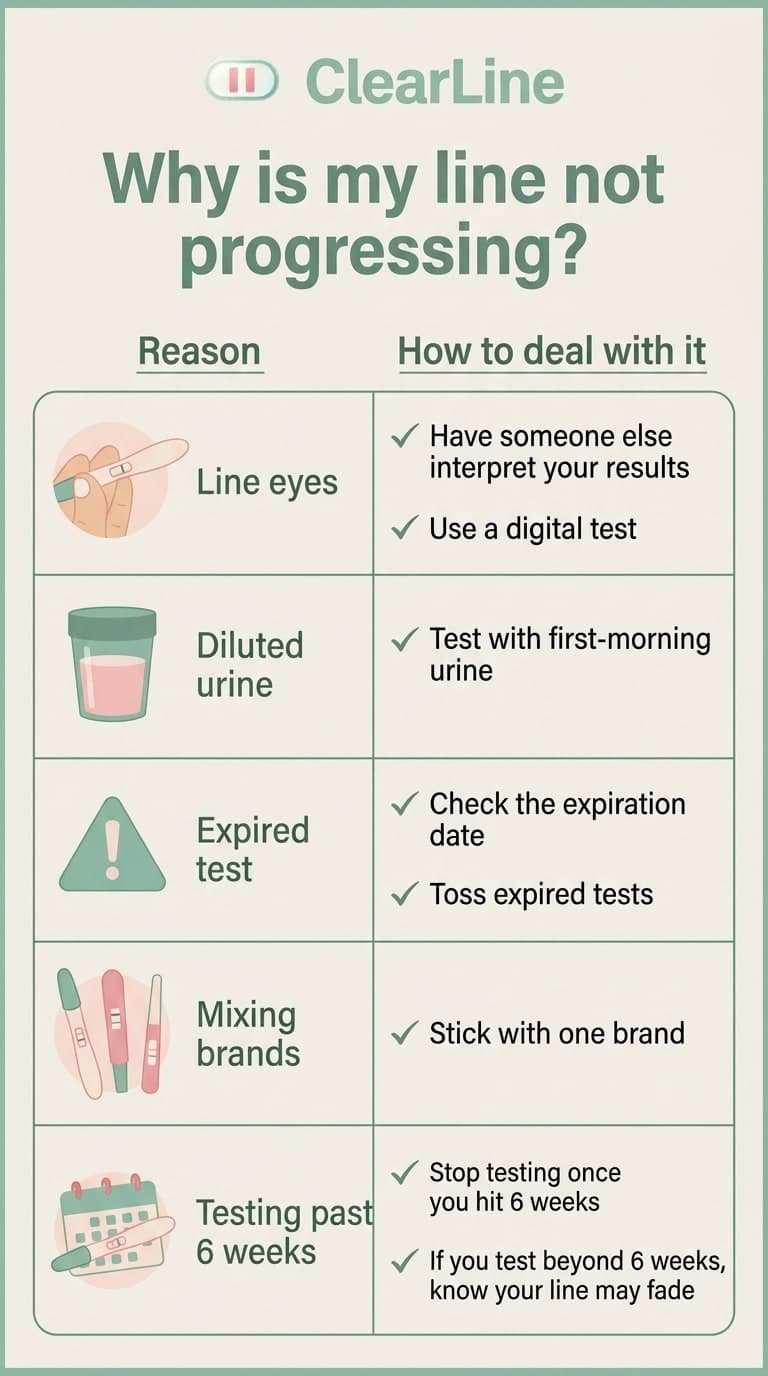
- Line eyes: Subjective reading makes tiny changes hard to judge. Ask someone else to look, or compare photos side-by-side with the collage tool above.
- Diluted urine: Extra fluids lower hCG concentration in pee and can make a line look lighter. Prefer first-morning urine.
- Expired tests: Results from expired kits are unreliable. Check the date and toss outdated tests.
- Mixing brands: Different sensitivities and dyes make apples-to-oranges comparisons. Stick with one brand for progression.
- Testing past ~6 weeks: Doubling slows; by later first trimester, lines may not darken the way they did early on, and fading after the hCG peak can be normal.
Other Reasons a Test Line May Not Get Darker
Beyond everyday testing issues, a few medical and timing factors can affect what you see on the strip.
Evaporation line
If a test sits too long past the reading window, urine salts can leave a colorless or grayish mark that looks like a faint line. That evaporation line is not caused by hCG and is not a positive result. Always check results within the time on the package, then discard the stick. Learn more in our evaporation line guide.
A true positive has color (pink, blue, or purple depending on the dye). Photograph your test within the window if you want to track progression later.
Early pregnancy loss
Sometimes a line that does not darken, or that fades after a clear positive, can be associated with early pregnancy loss. Slow-rising hCG has been linked with higher miscarriage risk in clinical research, but home strips are not diagnostic. If progression concerns you, contact your clinician; serial blood hCG tests are more informative than urine photos alone.
Ectopic pregnancy
In an ectopic pregnancy, the fertilized egg implants outside the uterus. hCG can still rise, but often more slowly, which may mean a urine test line darkens less than expected. Ectopic pregnancy can become dangerous if untreated. Seek urgent care for severe abdominal pain, shoulder pain, dizziness, or heavy bleeding.
Why Is My Pregnancy Test Line Getting Lighter?
A fading or disappearing line has a few possible explanations: some benign, some that need medical follow-up.
The hook effect
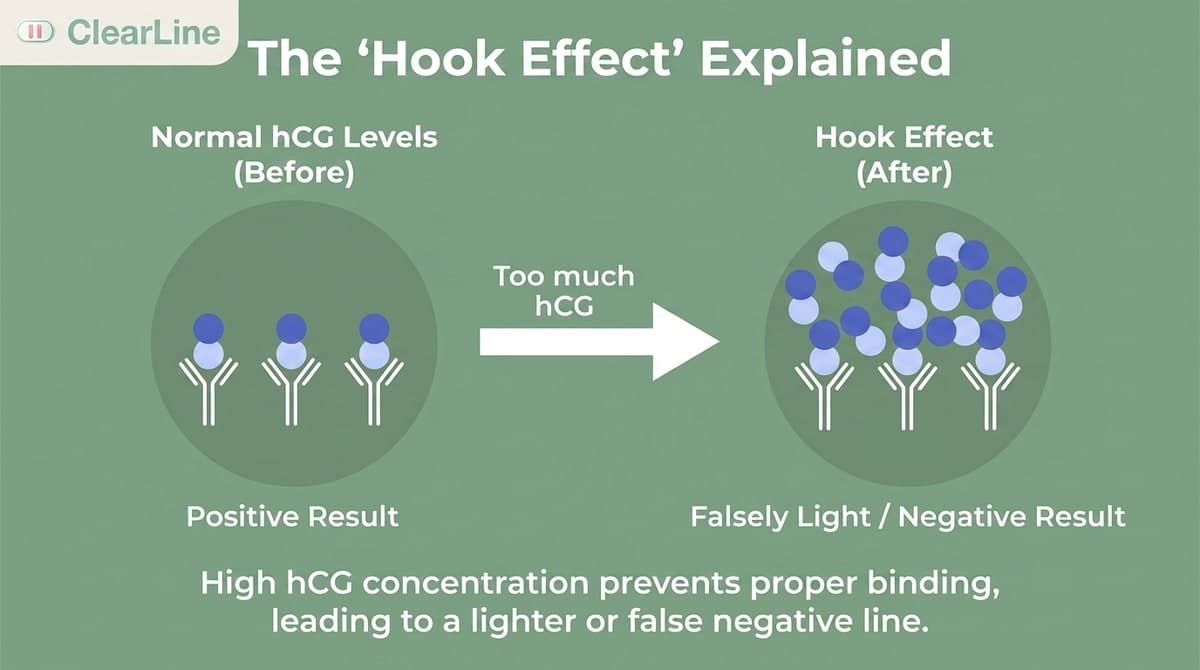
Very high hCG can occasionally overwhelm some urine tests and produce a falsely light or negative result: the “hook effect.” It is uncommon and more often discussed with very high levels (for example multiples or certain conditions). It is most relevant later in the first trimester when hCG is near its peak. If clinical suspicion is high and urine tests look oddly light, a clinician can order blood hCG or advise diluted-sample testing.
Chemical pregnancy
A chemical pregnancy is a very early loss, often before ultrasound can confirm a pregnancy. Fertilization occurs and hCG rises enough for a positive test, then levels fall, so a line that was positive can fade or turn negative. These losses are usually due to chromosomal factors and are not anyone’s fault. If you need support, lean on your clinician and trusted community resources.
Tips for Accurate Pregnancy Test Line Progression
Use this checklist so comparisons reflect your hormone trend, not noise from testing habits.
| Tip | Why it helps |
|---|---|
| Follow instructions and read within the suggested timeframe | Helps prevent evaporation lines |
| Check the expiration date; don’t use expired tests | Avoids unreliable chemistry |
| Get a second opinion on the photo, or use a digital test | Reduces “line eyes” bias |
| Stick with the same brand when tracking after a positive | Keeps sensitivity and dye consistent |
| Use first-morning urine; avoid excess fluids beforehand | Keeps hCG concentration more stable |
| Retest about every 48 hours and save photos in a collage | Matches early doubling time and makes trends clearer |
When to Take Another Pregnancy Test
For progression tracking, retest about every 48 hours with first-morning urine when you can. Use our retest planner to pick a time and add it to your calendar. If you want the earliest sensible day for a first test based on your cycle, try the pregnancy test calculator.
Contact a healthcare provider promptly for severe pain, heavy bleeding, dizziness, or if line progression or a fading positive is worrying you. Home strip photos are helpful for personal tracking but do not replace clinical care.
Frequently Asked Questions
How quickly should pregnancy test lines darken?
In early pregnancy, hCG roughly doubles every 48–72 hours. Pregnancy test lines often look noticeably darker when you compare tests taken about 48 hours apart with first-morning urine. Day-to-day changes can be subtle, so every-other-day comparisons are usually more useful than testing multiple times in one day.
What should pregnancy test progression look like?
In early pregnancy, a healthy progression usually shows a test line that gets darker over several days as hCG rises. From about 8 DPO to 14 DPO, many people see a barely-there line become clearer, then more obviously positive. After roughly 10–11 weeks, hCG often peaks and may plateau or drop, so lines can look the same or lighter even in a viable pregnancy.
Do pregnancy tests show progression?
Yes. Because most at-home tests react to hCG in urine, rising hormone levels typically produce a darker test line over time, especially in the first several weeks. Progression is easiest to see when you use the same brand, first-morning urine, and photos taken within the test’s reading window.
When should a pregnancy test get darker?
Many people notice darkening every 2–3 days in early pregnancy. There is wide normal variation depending on implantation timing, brand sensitivity, and urine concentration. If lines stay the same or get lighter over several 48-hour comparisons, talk with a clinician; a blood hCG can clarify what’s going on.
Can a faint line still mean pregnancy?
Yes. A faint line with color, even a very light pink or blue, is usually considered a positive result. Faint lines are common early on when hCG is just crossing the test’s detection threshold. Retest in about 48 hours with first-morning urine to see if the line is darkening.
Why is my progression line not getting darker?
Common explanations include diluted urine, mixing brands with different sensitivities, expired tests, “line eyes” (subjective reading), later implantation, or testing after about 6 weeks when doubling slows. Less often, slow or fading progression can relate to early pregnancy loss or other medical issues. See a healthcare provider if you’re concerned.
Why is my pregnancy test lighter at 7 weeks?
By around 6–7 weeks, hCG doubling often slows. Closer to 10–11 weeks, levels frequently peak and then hold steady or decline, which can make urine test lines look lighter even when pregnancy is progressing. Mixing brands, diluted urine, or the rare hook effect can also change how dark a line looks.
How dark should a pregnancy test line be at 1 week?
There is no single “correct” darkness at one week past a missed period or around early DPO. Some people have a strong line early; others stay faint longer after later implantation. Focus on whether your line is darkening over 48-hour intervals with consistent testing conditions, not on matching someone else’s photo.
How soon can a pregnancy test turn positive?
It depends on implantation timing, your hCG level, and the test’s sensitivity (many detect around 20–25 mIU/mL; some claim earlier). Early tests may show a faint positive before a missed period, but waiting until the first day of a missed period reduces false negatives. If results are unclear, wait a few days and retest with first-morning urine.
Can progression vary between brands?
Yes. Brands differ in sensitivity and dye color. A line may look darker on one brand than another with the same hCG level. For the fairest progression comparison, stick with the same brand and test type each time.
How many days apart should I test?
About every 48 hours is a practical interval for tracking progression, since hCG often doubles on a similar timeframe early on. Daily testing can increase stress when changes are tiny. Use first-morning urine when you can, and photograph results within the reading window.
Should I compare tests at the same time of day?
Yes when possible. First-morning urine usually has the highest hCG concentration. Comparing a morning test to an evening test can make a line look lighter or darker simply because of dilution.
iOS + Web
Want clearer results? Use ClearLine to analyze your test automatically
Upload your pregnancy test photo and let ClearLine AI analyze it in seconds on web or iOS.

Web + iOS · Subscription required