
Semen analysis results explained
Compare each line to WHO 6th edition lower limits. One number below a limit is common. Time sex with ovulation tests while you wait on a repeat sample.
Enter what is on the report
Leave a box blank if that line is missing.
iOS + Web
Time the fertile window while you wait
Photograph an ovulation test and let ClearLine AI read the line in seconds on web or iOS.

Web + iOS · Subscription required
How to read the report
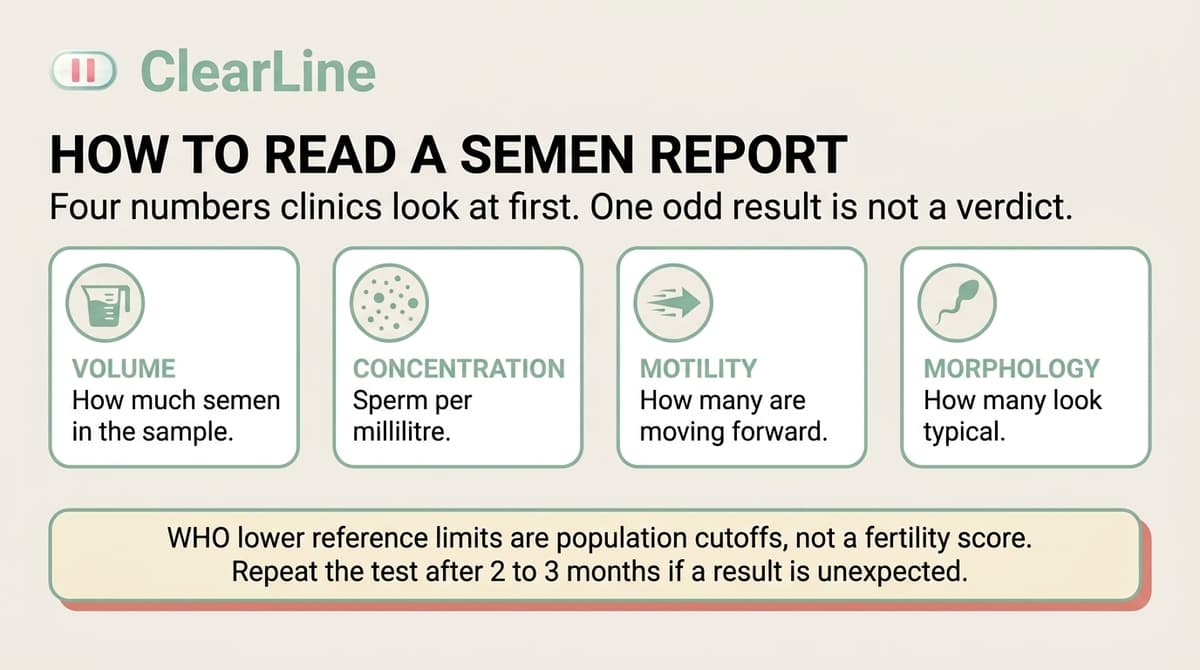
Volume, concentration, total count, progressive motility, and morphology are separate lines. WHO 6th edition (2021) lower limits are 1.4 ml, 16 million per ml, 39 million per ejaculate, 30% progressive motility, and 4% normal forms. Many printouts still use 5th edition (2010) numbers.
Before the test
Clinics often ask for 2 to 7 days of abstinence. The sample needs to reach the lab inside the stated time. Incomplete collection looks like low volume. Read how much sperm to get pregnant and male factor infertility.
Morphology methods
Kruger strict criteria and WHO methods do not grade sperm the same way. A 4 percent normal forms line looks harsh because strict criteria label many sperm as abnormal. Read morphology with count and motility, not alone.
When to repeat
Sperm production takes about two to three months. Fever, heat, and a bad collection day can trash one sample. Repeat before a big treatment fork. Lifestyle can move numbers. See improve sperm health.
Timing at home
While you wait, time sex with ovulation tests. That is a home job. IUI and IVF are clinic jobs. Use the OPK start day calculator, then photograph strips so timing stays on you.
Lifestyle that can move numbers
Smoking, extra heat, anabolic steroids, and untreated fever can knock counts. Changes take two to three months to show. See improve sperm health. This page is literacy, not a treatment plan.
Frequently Asked Questions
Is 16 million sperm per ml low?
16 million per ml is the WHO 6th edition lower reference limit for concentration. Sitting on the line is not infertility. Many labs still print the 5th edition figure of 15 million per ml.
What does 4% morphology mean?
Under strict criteria, 4% normal forms is the WHO lower limit. The method (Kruger versus WHO) changes how harsh the number looks. Read morphology with count and motility, not alone.
Should we repeat a semen analysis?
Yes if a result is unexpected. Fever, collection problems, and short abstinence can crash a sample. Repeat in 2 to 3 months unless a clinician has already explained azoospermia.
Does one low number mean we need IVF?
No. One parameter below a limit is not a treatment plan. Clinics look at the whole picture, the other partner, and how long you have been trying.
Can ClearLine analyse a semen report?
No. ClearLine reads home ovulation tests and pregnancy tests from photos. Time sex with OPKs while you wait on a repeat lab test.